 Electrical Estimating Software
Red Rhino learning center
Electrical Estimating Workflow: How to Standardize Your Process
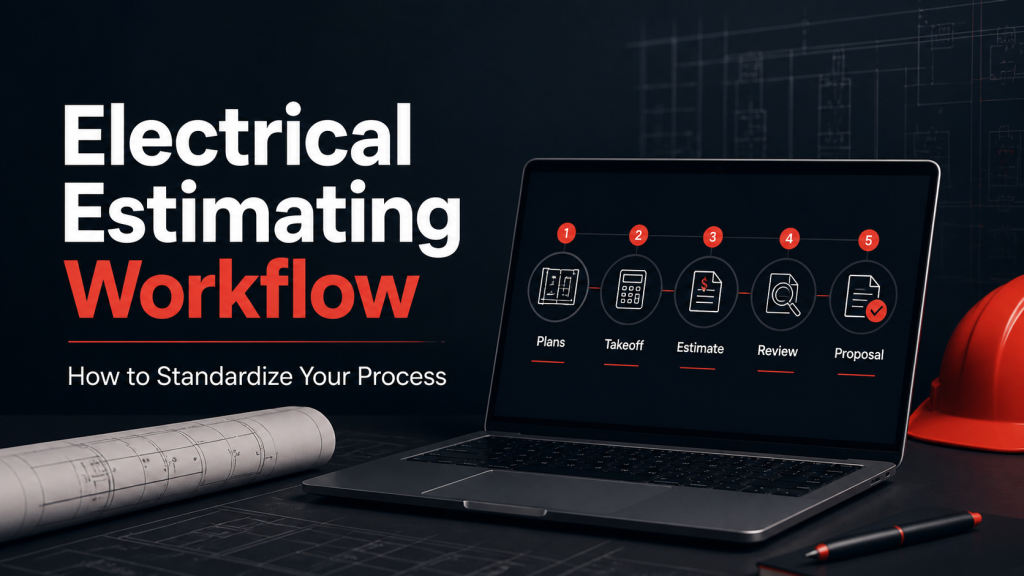
Many estimating problems come from an inconsistent process rather than a lack of estimating knowledge.
One estimator approaches a job one way. Another estimator handles it differently. Scope review gets rushed. Takeoff is done in pieces. Labor assumptions change depending on who is doing the work. By the time the bid is submitted, the team may not have a clean view of what was actually carried.
That is where a structured electrical estimating workflow makes a difference.
A strong workflow helps your team move from drawings to final proposal in a way that is repeatable, reviewable, and easier to audit. When paired with the right electrical estimating software, it can also reduce unnecessary handoffs and keep estimating information organized. If you are evaluating platforms, use our 2026 electrical estimating software comparison to compare workflow, takeoff, labor, pricing, and contractor fit.
Why Electrical Estimating Workflows Break Down
Estimating is complex. It involves plans, specifications, labor, materials, vendor quotes, addenda, and deadlines. Without a defined workflow, important steps can be handled differently from one bid to the next.
Common breakdowns include:
- Starting takeoff before fully understanding scope
- Different estimators using different methods
- Disconnect between takeoff quantities and labor
- Missing or late vendor quotes
- No structured recap before final pricing
- Rushed or informal bid review
These issues can contribute to omissions, inconsistent assumptions, and difficult bid reviews.
They also overlap with many common electrical estimating mistakes.
What a Strong Estimating Workflow Looks Like
A strong electrical estimating workflow is not about adding unnecessary steps. It is about organizing the right steps in a consistent order.
A good workflow should:
- Start with clear scope understanding
- Follow a consistent takeoff structure
- Apply assemblies and labor in a repeatable way
- Capture and manage vendor quotes clearly
- Provide visibility into material and labor totals
- Include a structured review before submission
Most importantly, it should not depend only on one person’s memory or habits. The process should be understandable and reviewable across the estimating team.
Step-by-Step Electrical Estimating Workflow
Below is a practical workflow electrical contractors can adapt to their own estimating process.
Step 1: Pre-Bid Review and Scope Understanding
Before takeoff begins, estimators need to understand what they are bidding.
This includes reviewing:
- Drawing index and electrical sheets
- Specifications
- Addenda and RFIs
- General notes and installation requirements
- Project schedule and constraints
This step helps identify scope before quantities and costs are built into the estimate.
When code requirements affect scope, estimators should verify the applicable adopted code and project documents. NFPA maintains information about NFPA 70 (National Electrical Code).
Step 2: Structured Takeoff
Once scope is understood, the next step is takeoff.
A structured takeoff process should:
- Break the project into systems such as lighting, power, feeders, and low voltage where applicable
- Use consistent naming for floors, areas, and phases
- Separate alternates and add-ons clearly
- Track revisions from addenda
The goal is not just to count. The goal is to create quantities that are organized well enough to review, price, and revise.
Red Rhino does not currently perform automatic or AI plan takeoff. Estimators establish and review plan quantities, then use Red Rhino to organize those quantities within the estimating workflow.
Step 3: Assemblies and Labor Application
Takeoff quantities alone do not create a complete estimate. They need to be connected to products, labor, and installation assumptions.
Assemblies can help standardize this step by grouping typical materials and labor for recurring installation conditions.
Depending on the contractor’s workflow, assemblies may include:
- Material groupings
- Labor units
- Installation assumptions
- Accessories and typical components
Contractors should review assemblies for the actual project conditions rather than treating any assembly as universally applicable.
Industry references such as the NECA Manual of Labor Units can be one input when contractors establish or review labor assumptions.
Step 4: Quote Management and Material Pricing
Material pricing is not always straightforward, especially for quoted equipment and project-specific packages.
Quotes may come from:
- Lighting vendors
- Gear manufacturers or distributors
- Low-voltage suppliers
- Specialty system providers
A good workflow includes a clear way to:
- Track which quotes are received
- Identify missing quotes early
- Check quote scope, quantities, alternates, freight, and exclusions
- Apply pricing consistently
- Avoid double-counting or omissions
For a deeper pricing workflow, see our guide to electrical material pricing for estimates.
Step 5: Recap and Internal Review
Before final pricing, estimators should review the estimate at a high level.
This includes:
- Total material cost by system
- Labor hours by scope area
- Major equipment and quoted items
- Scope gaps or overlaps
- Alternates and exclusions
- Indirect job expenses, overhead, and profit assumptions
Clear summaries make it easier to understand what the estimate contains and where additional review may be needed.
Step 6: Final Bid Review
The last step before submission is a formal review.
A structured review should confirm that:
- Scope matches the drawings, specifications, and addenda
- Labor assumptions reflect project conditions
- Quotes are included correctly
- Inclusions, exclusions, qualifications, and alternates are clear
- The proposal reflects the estimate
For proposal-specific guidance, see our electrical proposal workflow guide.
How Standardization Supports a Better Review Process
Some contractors worry that adding structure will slow estimating down. The practical goal is the opposite: make each bid easier to understand, review, and hand off.
A standardized workflow can help teams:
- Reduce unnecessary rework
- Review estimates more consistently
- Train new estimators around one documented process
- Keep assumptions and assemblies organized
- Compare estimate structure across similar jobs
The exact benefit depends on the contractor’s existing process, project mix, and how consistently the workflow is used.
Where Electrical Estimating Software Fits Into the Workflow
Software should support estimator judgment rather than replace it.
For Red Rhino, the estimating workflow includes organizing takeoff quantities, products, assemblies, labor, material pricing, recap information, and proposals in one structured system.
That does not mean every estimating task is automated. Plan interpretation, quantity verification, project-specific scope decisions, quote review, labor adjustments, and final bid approval remain estimator responsibilities.
For teams looking to strengthen the process itself, the Learn Electrical Estimating hub provides additional contractor-focused workflow guidance.
How to Transition from Manual Estimating to a Standardized Workflow
Moving away from spreadsheets, handwritten notes, or an estimator’s personal system works best as a controlled transition—not an overnight switch.
1. Audit Your Current Process
Document how your team currently reviews scope, performs takeoff, applies labor, gets material pricing, enters vendor quotes, handles overhead and job expenses, and completes bid review. Identify where duplicate entry, missing information, or inconsistent assumptions occur.
2. Configure the System Around Your Business
Set up company information, labor rates, material-price practices, overhead, markup, proposal language, and frequently used products and assemblies. Standardize the estimating logic your company actually intends to use.
3. Test a Completed or Straightforward Job
Run a past project through the new workflow and compare it with the original estimate and known job information. A completed job gives the team a familiar reference while learning the system.
4. Train Around One Shared Method
Document the order in which estimators should review scope, perform takeoff, apply labor, enter quotes, complete recap, and conduct final review. If several people estimate, assign responsibility for maintaining shared standards and assemblies.
5. Expand Gradually and Review Results
After the team can complete straightforward bids consistently, introduce larger projects and more detailed assemblies. Review estimate-to-actual results where available and refine labor, assemblies, and process rules using the company’s own history.
Contractors evaluating Red Rhino can use a real project during the 14-day free trial to see how the workflow fits their estimating process before subscribing.
Frequently Asked Questions
What is an electrical estimating workflow?
An electrical estimating workflow is the repeatable process used to move from bid documents and scope review through takeoff, labor, material pricing, recap, bid review, and proposal preparation.
Why standardize electrical estimating?
Standardization makes estimating assumptions and review steps easier to follow across bids and across estimators. It can also make training, handoff, and post-bid review more consistent.
Does Red Rhino perform automatic plan takeoff?
No. Red Rhino does not currently perform automatic or AI plan takeoff. Estimators review plans and establish quantities, then use Red Rhino to organize estimating quantities, products, assemblies, labor, pricing, recap information, and proposals.
Does software replace estimating experience?
No. Electrical estimating software organizes information and supports the workflow, but experienced estimator judgment remains important for scope, quantities, labor conditions, quotes, risk, and final bid approval.
What role do assemblies play in estimating?
Assemblies can group recurring materials and labor assumptions so estimators do not rebuild common installation logic from scratch. They should still be reviewed for project-specific conditions.
Build a More Consistent Estimating Process
If your estimating process depends heavily on spreadsheets, disconnected notes, or individual habits, a structured system can make bids easier to organize and review. Red Rhino Electrical Estimating Software is built for electrical contractors who want a clearer workflow from reviewed takeoff quantities through labor, material pricing, recap, and proposal creation.