 Electrical Estimating Software
Material pricing can turn a good electrical takeoff into a bad bid if the estimator uses stale costs, misses a pack-size difference, applies the wrong unit of measure, or assumes a supplier quote covers more than it actually does. The goal is not to find one universal price for every electrical product. It is to build a repeatable process for connecting reviewed takeoff quantities to costs that make sense for the project, supplier, location, and bid date.
This guide explains how electrical contractors can organize material pricing, review supplier quotes, handle volatile or project-specific items, and use electrical estimating software without losing control of the numbers behind the bid.
Why Electrical Material Pricing Needs Its Own Review
An estimate can contain accurate quantities and still be wrong financially. Material costs change, distributors use different part descriptions, some products are sold by the each while others are priced by the foot, hundred, box, roll, or package, and quoted equipment can carry freight, tax, lead-time, or scope conditions that are easy to overlook.
A dependable pricing workflow separates three questions:
- What exact material and quantity does the estimate require?
- What cost basis is being used for that material?
- Is that cost appropriate for this project and this bid date?
Keeping those questions separate makes it easier to catch pricing errors before they become proposal errors.
Start With a Reviewed Material Takeoff
Pricing should follow quantity review. If the takeoff is incomplete, better prices will not rescue the estimate. Confirm devices, raceway, wire and cable, fittings, supports, boxes, grounding material, equipment connections, accessories, and other installation material before spending time fine-tuning unit costs.
For the quantity side of the process, use the electrical material takeoff guide and the electrical takeoff workflow.
Use the Right Pricing Source for the Item
Not every item needs the same pricing method. A practical estimate may combine several sources.
Company database pricing
Stored material costs are useful for common products and early estimating work, especially when the database is maintained. Treat database pricing as a controlled starting point, not a reason to stop checking important items.
Distributor or supplier pricing
Supplier-specific costs are valuable for products your company buys regularly. Confirm that the description, manufacturer or approved equivalent, package quantity, and unit of measure match the item in the estimate.
Project-specific vendor quotes
Switchgear, lighting packages, generators, controls, specialty systems, large wire purchases, and other significant material may require a project quote. Review the quote as a scope document as well as a price document.
Allowances or estimator judgment
Sometimes a final vendor quote is not available before bid day. If an allowance or estimator-established cost must be used, document the assumption so it can be identified during bid review and updated if better information arrives.
Check Unit of Measure Before Comparing Prices
One of the easiest ways to create a large material error is to compare prices that use different units. A product may be quoted per each, per box, per hundred, per thousand feet, or per roll. Pack-size and unit-of-measure errors can make a price look unusually cheap or expensive while the underlying product cost is actually normal.
Before replacing a database price with a supplier price, verify:
- manufacturer and part number when applicable;
- description and size;
- unit of measure;
- package or carton quantity;
- whether the price is extended or unit price;
- freight or delivery treatment; and
- tax treatment used in the estimate.
Review Quotes for Scope, Not Just Total Price
The lowest quote is not necessarily the lowest complete cost. Two vendors may quote different manufacturers, quantities, accessories, freight terms, alternates, or exclusions.
For major quoted material, compare the quote against the drawings, specifications, schedules, addenda, and your takeoff. Check whether required accessories, spare parts, controls, testing, startup, delivery, and other project-specific requirements are included where applicable.
If a quote contains substitutions or alternates, make sure the estimator understands whether they are acceptable before carrying the price.
Handle Material Price Volatility Deliberately
Electrical material prices do not all move at the same rate, and a price that was reasonable on a previous project may not be appropriate for a new bid. The practical response is not to guess at a universal escalation percentage. It is to identify which items materially affect the job and verify them at the level the bid requires.
For high-dollar or volatile items, consider the bid date, expected purchase date, quote validity, project schedule, and any approved escalation or qualification language your company uses. If the bid documents require firm pricing for a defined period, that requirement should be reflected in the material-pricing review.
Do Not Let Pricing Replace Labor Review
Material cost and labor are related in the estimate but they are different decisions. A cheaper product can require different installation time. A quoted assembly may include some accessories but not others. A material substitution may affect fittings, supports, terminations, testing, or handling.
Review labor independently using project conditions and your estimating standards. See the electrical estimating labor units guide for a deeper explanation.
How Electrical Estimating Software Helps Organize Material Pricing
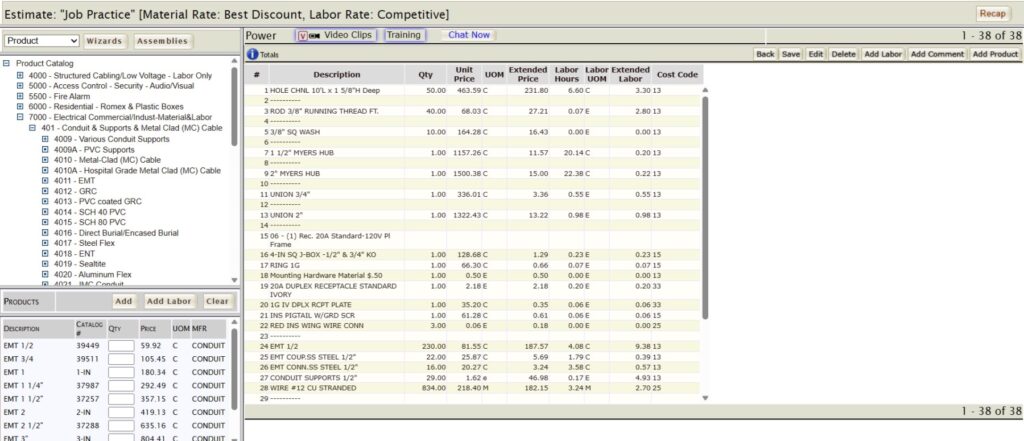
Electrical estimating software should give the estimator a consistent place to connect takeoff quantities with products, costs, labor, assemblies, and quoted items. The important benefit is control and reviewability: the team can see what price was carried, update it when better information arrives, and review the material total before the bid is finalized.
Red Rhino helps contractors organize products, material costs, labor units, assemblies, and estimate recaps in the estimating workflow. Contractors should still verify important supplier costs and project quotes before submitting a final bid. Red Rhino does not currently perform automatic or AI plan takeoff; estimators establish the quantities used in the estimate.
A Practical Material-Pricing Checklist Before Bid Day
- Confirm the material takeoff is complete enough to price.
- Identify high-dollar and quoted items early.
- Verify unit of measure and package quantities.
- Replace stale or generic costs where project-specific pricing is needed.
- Review vendor quotes against the plans, specifications, and addenda.
- Check freight, delivery, tax, and other cost treatment.
- Document allowances or unresolved pricing assumptions.
- Confirm alternates and substitutions are carried consistently.
- Review material totals by system or scope area for unusual values.
- Recheck major prices during final bid review if updated quotes arrive.
Material pricing belongs inside the broader electrical estimating workflow, not as an isolated spreadsheet exercise.
Frequently Asked Questions
How often should electrical material prices be updated?
There is no single interval that fits every contractor or product. Common database items should be maintained often enough to remain useful, while high-dollar, volatile, or project-specific material should be verified for the actual bid when practical.
Should I use national average pricing for a final electrical bid?
Average or reference pricing can help with early estimating, but final bids should use costs that reasonably reflect the contractor’s suppliers, purchasing terms, location, project timing, and quoted equipment.
What should I check before entering a supplier price into estimating software?
Confirm the product identity, unit of measure, pack size, price basis, freight and tax treatment, and whether the quote includes the complete scope you intend to carry.
Can electrical estimating software keep material pricing accurate automatically?
Software can organize and update pricing data, but the estimator still needs to verify that the cost source, product, unit, and project assumptions are appropriate for the bid. No database should replace review of important project-specific quotes.
Make Material Pricing Reviewable
The best material-pricing process is one your estimator can explain. Every important cost should have a reasonable basis, every quote should match the intended scope, and changes should flow through the estimate before the proposal is sent.
To evaluate the complete Red Rhino workflow, review the current subscription and free-trial information or visit Learn Electrical Estimating for more contractor-focused estimating guidance.