Electrical Estimating Assemblies: How Contractors Build Faster, More Consistent Bids
Learn how electrical estimating assemblies connect material and labor, reduce missed items, and help contractors build faster, more consistent bids.

Use this electrical estimating resource center to learn how contractors build more accurate bids, organize takeoffs, use labor units and assemblies, account for material pricing, and create professional proposals.


A dependable electrical estimate follows the same basic sequence whether you are preparing an early budget number or a detailed bid. The level of detail changes, but the estimator still needs to define the scope, count the work, calculate labor and material costs, cover indirect expenses, and review the final proposal.
Start by confirming exactly what is included. Review drawings, specifications, addenda, alternates, schedules and contract requirements. Note existing conditions, access limitations, phasing, working-hour restrictions and anything that needs clarification. A job walk can reveal conditions that are easy to miss on the plans.
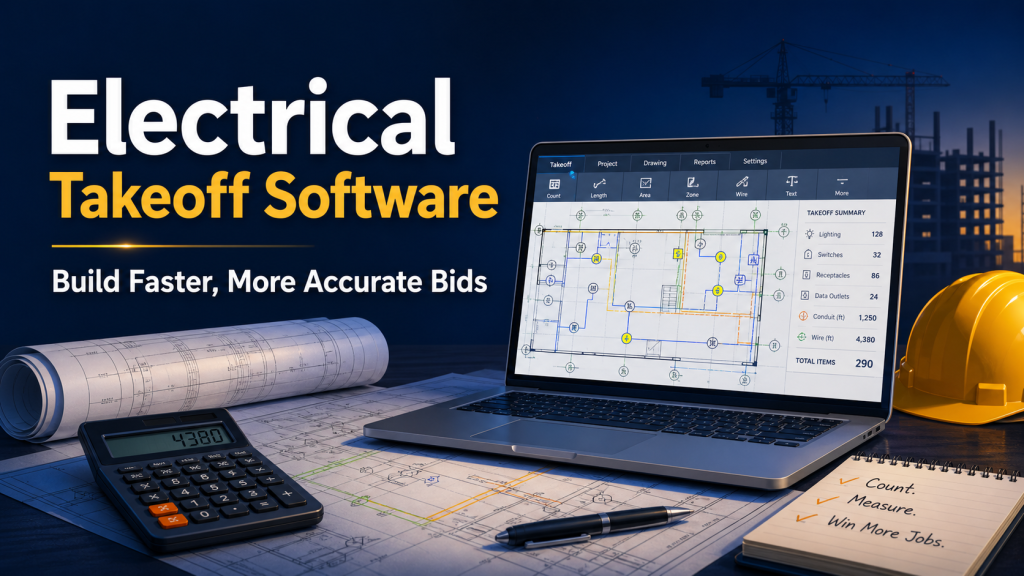
Count and measure the work before assigning prices. Organize quantities by system, area, floor or drawing so they can be checked later. Include fittings, supports and other components required for installation, not only the major devices shown on the plans. Keep quantity takeoff separate from pricing so a price update does not require recounting the job. See the electrical takeoff workflow.
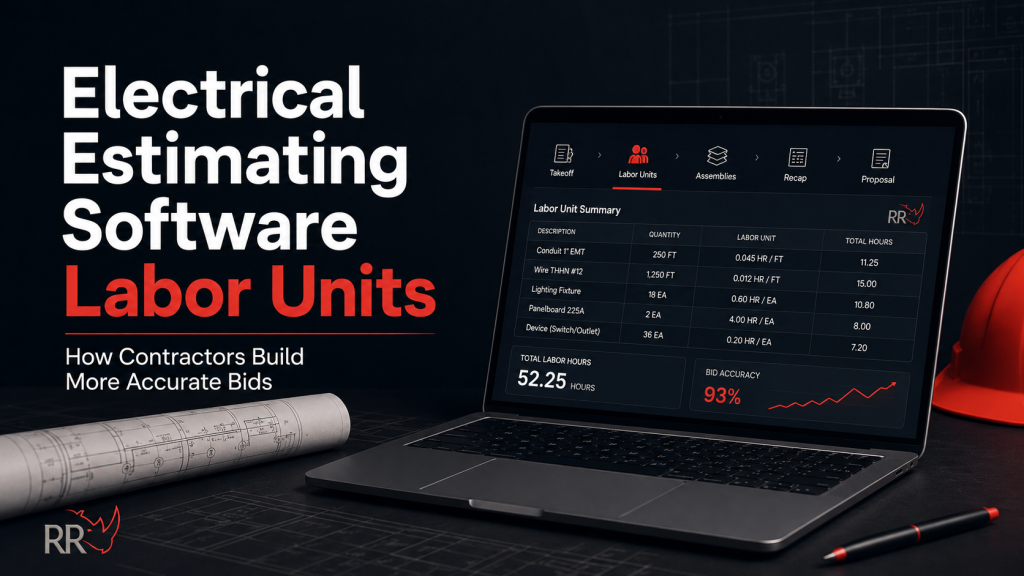
Apply labor units consistently, then adjust them for the actual job. Ceiling height, congestion, occupied spaces, difficult access, crew experience, weather, overtime and project phasing can all affect productivity. Include supervision, layout, testing, cleanup and other labor that may not appear as an obvious takeoff item. Learn more about electrical estimating labor units.
Use current supplier pricing and verify large or volatile items instead of relying on an old cost library. Add freight, tax, rentals, small tools, subcontractor quotes and any special equipment required by the project. Record the date and source of major pricing assumptions so they can be reviewed before the bid is submitted.
Account for permits, mobilization, temporary power, project management, bonds, insurance, vehicles and other indirect costs. Then apply the company’s overhead and profit method consistently. A contingency may be appropriate for genuine uncertainty, but it should not replace careful scope review or known costs.
Check quantities, labor extensions, material prices, quotes, exclusions and alternates. Compare the total with similar completed projects and investigate large differences instead of simply changing the number. Confirm that every assumption is documented and that the estimate matches the latest plans and addenda.
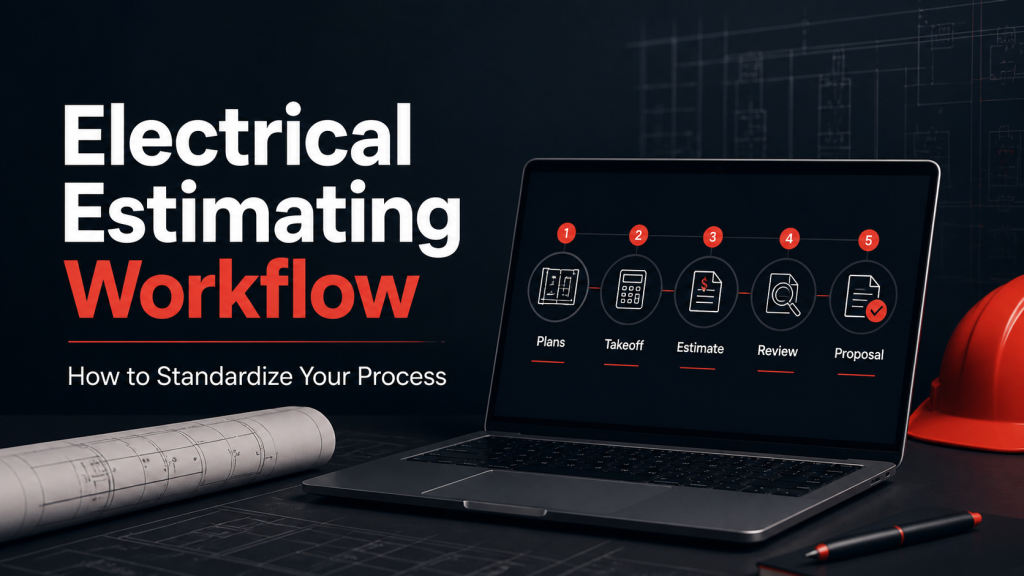
Present a clear proposal that defines the scope, price, inclusions, exclusions, allowances and alternates. After the job, compare estimated labor, material and expenses with actual results. That feedback turns completed projects into useful estimating history and helps improve future bids. For a repeatable process from qualification through proposal, use the electrical estimating workflow.
Learn electrical estimating step by step. Start with the basics or jump directly to plan review, takeoffs, labor units, material pricing, bid strategy, and proposal creation.
Build a foundation before estimating a job. These topics cover the basics, common methods, estimating mindset, and tools used in the estimating process.
Learn how to review plans, walk the job, prepare takeoffs, check drawings, and organize the information needed before pricing the estimate.
Understand how labor units, assemblies, material takeoffs, fixtures, controls, switchgear, feeders, generators, and exclusions affect your final bid.
Work through bid review, customer qualification, sub quotes, job expenses, quote review, and proposal creation so your estimate is complete, competitive, profitable, and clearly presented.
Red Rhino Electrical Estimating Software helps contractors organize labor units, assemblies, material pricing, takeoffs, proposals, and project details in one cloud-based estimating system.
Copyright © 2026 Hard Hat Industry Solutions. All rights reserved.